
Market cap of all cryptocurrencies
Related Links Are you ready to learn more? Visit our glossary and crypto learning center. Are you interested in the scope of crypto assets? Investigate our list of cryptocurrency categories slots.lv review. Are you interested in knowing which the hottest dex pairs are currently?
CoinMarketCap does not offer financial or investment advice about which cryptocurrency, token or asset does or does not make a good investment, nor do we offer advice about the timing of purchases or sales. We are strictly a data company. Please remember that the prices, yields and values of financial assets change. This means that any capital you may invest is at risk. We recommend seeking the advice of a professional investment advisor for guidance related to your personal circumstances.
NFTs are multi-use images that are stored on a blockchain. They can be used as art, a way to share QR codes, ticketing and many more things. The first breakout use was for art, with projects like CryptoPunks and Bored Ape Yacht Club gaining large followings. We also list all of the top NFT collections available, including the related NFT coins and tokens.. We collect latest sale and transaction data, plus upcoming NFT collection launches onchain. NFTs are a new and innovative part of the crypto ecosystem that have the potential to change and update many business models for the Web 3 world.
Cryptocurrencies all
In January 2024 the SEC approved 11 exchange traded funds to invest in Bitcoin. There were already a number of Bitcoin ETFs available in other countries, but this change allowed them to be available to retail investors in the United States. This opens the way for a much wider range of investors to be able to add some exposure to cryptocurrency in their portfolios.
Cryptocurrencies are digital assets that are secured by cryptography. They use decentralized networks to transfer and store value, and the transactions are recorded in a publicly distributed ledger known as the blockchain. Transactions are verified by network nodes and recorded in a public distributed ledger known as the blockchain. Cryptocurrency transactions are secure, and are verified by a decentralized network of computers.
Welcome to CoinMarketCap.com! This site was founded in May 2013 by Brandon Chez to provide up-to-date cryptocurrency prices, charts and data about the emerging cryptocurrency markets. Since then, the world of blockchain and cryptocurrency has grown exponentially and we are very proud to have grown with it. We take our data very seriously and we do not change our data to fit any narrative: we stand for accurately, timely and unbiased information.
The very first cryptocurrency was Bitcoin. Since it is open source, it is possible for other people to use the majority of the code, make a few changes and then launch their own separate currency. Many people have done exactly this. Some of these coins are very similar to Bitcoin, with just one or two amended features (such as Litecoin), while others are very different, with varying models of security, issuance and governance. However, they all share the same moniker — every coin issued after Bitcoin is considered to be an altcoin.
Each of our coin data pages has a graph that shows both the current and historic price information for the coin or token. Normally, the graph starts at the launch of the asset, but it is possible to select specific to and from dates to customize the chart to your own needs. These charts and their information are free to visitors of our website. The most experienced and professional traders often choose to use the best crypto API on the market. Our API enables millions of calls to track current prices and to also investigate historic prices and is used by some of the largest crypto exchanges and financial institutions in the world. CoinMarketCap also provides data about the most successful traders for you to monitor. We also provide data about the latest trending cryptos and trending DEX pairs.
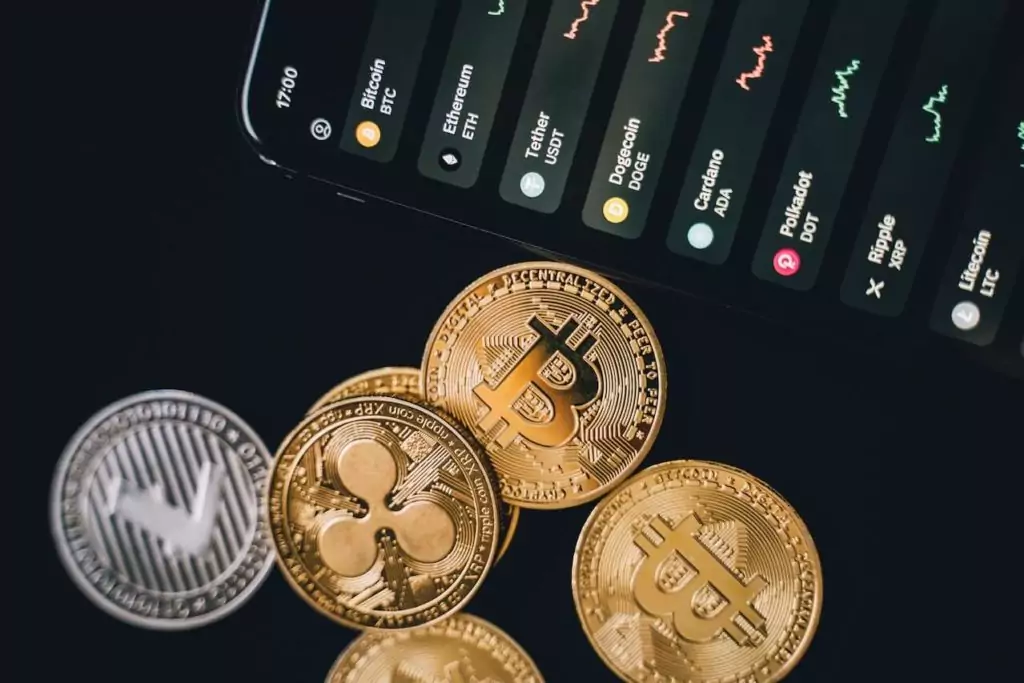
Are all cryptocurrencies based on blockchain
Blockchain forms the bedrock for cryptocurrencies like Bitcoin. This design also allows for easier cross-border transactions because it bypasses currency restrictions, instabilities, or lack of infrastructure by using a distributed network that can reach anyone with an internet connection.
IOTA replaced the traditional blockchain-based distributed ledger with a so-called directed acyclic graph (DAG). The IOTA protocol operates with a DAG-based consensus algorithm which the IOTA team have termed Tangle. Though still in development, Tangle is eventually intended to work as a distributed ledger similar to blockchains, but with a unique twist. A trader who makes a transaction must confirm two random previous transactions. Each of these two will have validated two other transactions before, and so on. The end result is not that transactions are grouped into blocks and stored in a blockchain. Rather, it is a stream of individual transactions entangled together.
Solutions to this issue have been in development for years. There are currently blockchain projects that claim tens of thousands of TPS. Ethereum is rolling out a series of upgrades that include data sampling, binary large objects (BLOBs), and rollups. These improvements are expected to increase network participation, reduce congestion, decrease fees, and increase transaction speeds.
Perhaps no industry stands to benefit from integrating blockchain into its business operations more than personal banking. Financial institutions only operate during business hours, usually five days a week. That means if you try to deposit a check on Friday at 6 p.m., you will likely have to wait until Monday morning to see the money in your account.


Add Comment